Devin Townsend interview - The Moth
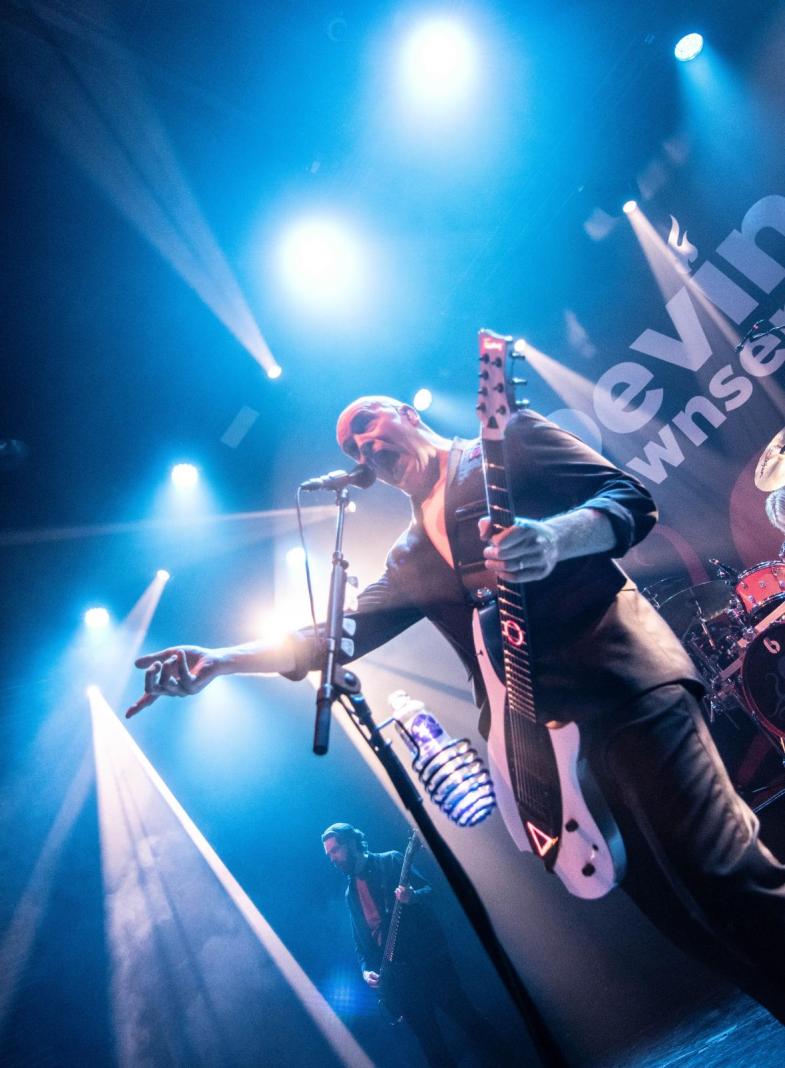
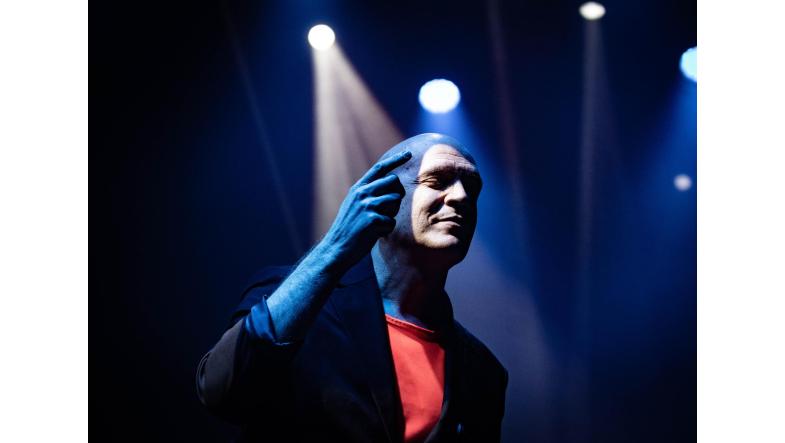 Devin Townsend by CL Photography
Devin Townsend udgiver den 29. maj 2026 sit nye album The Moth. I den anledning har vi interviewet ham omkring det nye projekt. The Moth er ifølge Townsend selv, , hans livs mesterværk, og har taget ham 10 år at færdiggøre. Albummet inkluderer 24 numre og har været et samarbejde mellem over 200 forskellige musikere.
How do you feel now that this project, which has been a long time coming, is finally done?
I mean, I don't want to be dismissive of the work, and I don't want to be too crude. But it feels like I've taken a shit after 10 years of being constipated. So, I don't want to be rude, but I'm going to be rude. Really, the bottom line is a huge relief. And a complicated relief too, I must admit. But as all the records have served a similar purpose, that purpose is basically these ideas appear, and then I just move through them.
You know, it's not necessarily like goals; it's just obstacles. But I mean, the benefit of this type of thinking is as much as that may make it seem like I don't have any interest in the music itself. No, that's not the case. It's just the music is the by-product of a process, and the process is what I'm interested in. So, it has been a long work in progress.
You also talked about The Moth as your life's work. What was the original spark behind The Moth as a project but also as this grand theatrical experience for the listener?
I think it's two things. One is that I was raised in the 70s and 80s, and my parents were very musical. So, it was a trend in the 70s and 80s to have all those movie musicals, right? Like Jesus Christ Superstar, Paint Your Wagon, West Side Story, Popeye, Cabaret. You know, all these Phantom of the Opera, all these Fiddler on the Roof, it's just endless. And that's what I was raised listening to. And so, I think the initial spark was probably when I was like eight years old, where I thought to myself, oh, one day it'd be fun to try that. But the actual first moment of, okay, I'm going to make The Moth occurred about 10 years ago. And how that occurred is exactly the same as how every other record I do occurs. It's, I get a moment, and there's no explanation for why these ideas come. I mean, maybe it can be a response to a stimulus, or it can be in reaction to a conversation.
I mean, regardless, there's no like tried- and- true method. But just this idea came that I was originally just like, oh, that's cool. And I just wrote it down. I was like, it's going to be called The Moth. It's going to be dark. It's going to have a huge orchestra and choir. The ending has to be soft. It must have something to do with sex and trauma. It has to be, you know what I mean? And so, I just wrote all these things down and didn't forget about it necessarily, but just sort of thought at the time, oh, this is going to be far too expensive for me to be able to like to write. And I didn't really seriously consider it. But again, it was an idea that seemed to be complete in its own sense. So, I just started passively learning. And it started by hiring a friend of mine from Denmark. And he would come to Vancouver. And he just started showing me orchestration.
Little things like this are a melody. What key is it in? Where do the violas harmonize? Where does the Chelli harmonize? And it was so frustrating, I got to tell you. Because I knew how to make music. I've already made 25 records at that point. So, there was this real sort of, you know, your ego is just like hurt by it. Because you like it, I don't know how to do any of this. And in the beginning, I think you probably encountered it in your opportunity to interview people. But sometimes people like to take pride in their ignorance about music. It's like, oh, I don't know how to write. I don't even know what the notes on the guitar are.
And there's a certain type of pride, right? Which I think I used to have until I went in with that mindset to try and work with orchestras and people that really knew. And they're like, it's okay that you don't know. But we're going to spend three hours as opposed to 15 minutes. And those three hours are going to cost you. And I was just like, oh, shit. I need to learn this. And so, the first five years of that process were just about like taking lessons. Then between five and seven years ago, it's been such a blur with the pandemic. I don't even remember. But I was doing an acoustic tour. And I ended up in Amsterdam. And at that show, I got a mail from management who were also located in the Netherlands at that point. And they said, well, listen; the North Netherlands National Orchestra and Choir is one of the most preeminent orchestras and choirs in Europe. They have a certain amount of government funding. And they're interested in working with you on your back catalog. And as flattering as that was, when I met them after a show, I was just like, well, instead of doing the back catalog, would you consider working with me on this idea that I have? And after a day or two of deliberating, they said yes. They said, here's the parameters. You have to deliver the score here. You've got to do this by then. It's going to be subject to approval from a committee and financial and all these sorts of things. And then when they said yes, suddenly, there was this wave of fear that I was just like, oh, no, now we really must do this. And then from that point on until the point now where you and I are talking has been like, I don't know the best way to describe it, running a marathon while screaming. So, you have this whole huge orchestra working with you.
Do you think there was a different approach to this style of music, when your own weapon of choice is the guitar?
There was a different approach to how to write music with the guitar and maybe lean a little bit back from just using the guitar as much and focusing more on having a more balanced experience between the orchestra and the choir and then the guitar. Yes, but there was no precedent that had been set for it. So, it was all trialed by fire. I remember when I first started making rock records back in 1993; I guess it was difficult. I didn't know anything about clicking tracks. I didn't know anything about tuning. I didn't know anything about team building and morale, and logistics that went along with it. But that was me. There was nobody else. Maybe I hired a drummer, but it was like all I had to really be responsible for was my own trip, my own reaction, my own performances, whatever. But then after a while, you end up internalizing these patterns.
If you have done anything for 40 years, I'd be surprised if you didn't get good at it. I've often said, if I was a carpenter or a plumber for the same amount of time that I've been doing music, I'd be pretty good at that, too. So, I learned how to make records to the point where it became like riding a bike. I'm like, OK, we've got another record to do. We'll book the armory. We'll get this set up. We'll get this here. We'll get the budget for the band. We'll get the budget for this. We'll fly these people in. Here's our deadline. Here's who's going to master. This is the person that's doing the art. It became like a factory, in a sense. But then all of a sudden, with The Moth, you have 200 people, and you have six different teams. And you've got eight different recording sessions going on simultaneously, one in Thailand, one in India, one in China, one in Canada, one in the Netherlands, one in Spain, one in the UK. You know what I mean? It's like one in Australia, and you're just like, you can't keep control over it in the same way. And very quickly, I started recognizing the skills that go into doing a project like The Moth, which, incidentally, I'll know how to do better next time. Are almost entirely people related. It's not music related. I mean, of course, the foundation of it is music. But, man, you've got to have that music written, because you've got to understand how to interact with teams, how to achieve what you want, how to do conflict resolution, how to do problem solving. And so much of The Moth, past the point where it was written, was just problem solving, problem solving, problem solving, problem solving, problem solving. And frankly, I didn't expect that. But also, I didn't expect how good we were going to be at it, like the team and myself. Like, we were good at it. And at the end of it now, now that we're led to you and I talking, how do I feel about it? I have no idea, dude. Like, I haven't had a chance to recover. Of course not.
What was the hardest sacrifice to make in making this project compared to other projects where you're maybe more dominant in just doing you?
That's a good question. I think the sacrifices are less on a musical or conceptual level and more on a personal level. By that, I mean, in order to make these statements, I have to become bigger. I have to become more popular. I have to make more money. I must do all of these things. Otherwise, I can't do these projects. You can't hire 200 people and just like giving them IOU pages. It's like if you want to do these things, people have to be paid. And because the nature of the industry is there's so many shifty people that for me, I'm like when I hire someone, I pay them immediately. Like as soon as the work is done, like send me your invoice, and then I contact the accountants, I'm like pay them.
Even if the accountants like we don't have the money right now, I'm like paying them, just paying them because then they'll work with me again. The people that won't work with you again are the ones that are like in this project fund. It's so fun that you should take half of your normal wage and wait four months longer than you should get paid. It's like after a while, they just stop working with you. So, in order for me to make something like The Moth, I had to become more visible. I have to do more interviews. I have to make more money. I have to put up more records. I have to tour. I have to do all these things. And frankly, I was on the fence about that. Before the project started, I was like, or I say fuck it and move to Thailand. But I often feel like, you know, those retractable leashes that you have on a dog? So they run, but then at a certain point, you're like, no, that's as far as you go.
You have to come back. And I was in Thailand for almost two months. And then all of a sudden, I was just like, I've got kids. I've got a partner. I have money problems. I've got a crew. I've got a studio. I have aging parents. I'I have dogs that are old. And so, I started being like, OK, I must do this. In this lifetime, I have to be Devin Townsend. And it was like a shocking realization. Because I thought I could just get away from it. But this is what I do. I remember talking to my mother about it. And I was like, fuck, I wish I could just be finished writing records. Not that I don't love it and things like this, but it's a lot. And it's psychologically intense to make something like The Moth. I will be the first to say that it's not a super fun project all the time. To do this stuff is really psychologically demanding. So, I kept saying to my mother, maybe if I just write enough records, eventually I will not have to write anymore. It's like you purge the artist's illness. And she was laughing at me. She was like, oh, that's hilarious. It's hilarious that you think being an artist is a choice. So, I had to kind of just make peace with that and be like, this is what I do. And that was probably the biggest sacrifice, if you want to look at it that way. Because what it meant was that I had to step up to the plate. I had to own it. I had to find compassion for myself. I had to find love for myself or else you just self-destruct.
And I've got no intention of self-destructing. It's a lot more work than self-destructing, I think. Self-destruction sometimes is as uncomfortable as it can be. It's like, dude, the path is pretty clear. Just sit with a bottle, and just go until you're dead. You know what I mean? But the other thing is just like, no, don't do that. Fight and fight your tendencies and then surrender to other things and surrender to other tendencies. It's not gentle work, brother.
Is there something that you either wish you achieved on this one or wish to achieve in the future?
I'm just looking for peace in my heart. And it might sound weird to people to hear that when you hear the type of music I do. But I mean, the nature of life is beyond my capacity to understand. And frankly, anybody who tries to tell you anything different, I'm just like, go fuck yourself, man. It's like the beauty of the universe, the beauty of the experience of being alive is so unquantifiable by our puny little lizard brains that the arrogance that I felt I had engaged in, and even for a moment feeling like I could quantify meaning in life, was just such hubris. And so almost all of my work now is imbued with the sense of, I don't understand. But by fostering self-compassion, by fostering self-respect, by surrounding myself with people who are amazing team members, we protect each other, we support each other, I've made peace with the fact that it's like, this is what I do. It was a hell of a thing, man. And it seems like from the outside, it seems hilarious even to me to think that I hadn't recognized that up to this point. But I think really what it came down to is that I had kids. I was a dad. I was busy going to soccer practices and then trying to go on tour and then changing diapers and all this shit. So, I never had a chance to think about any of the things that I had done. And then all of a sudden during the process of this recording, kids moved away, and my partner and I moved into different places. All these things happened. I was just like, what the fuck? There's definitely a big theme of evolution and self-acceptance in the whole atmosphere of the album. Do you think there will be, talking about evolution, a different way to listen to it today than there is in, let's say, 10 years for the fans and for everybody? No idea. I don't really think about it from that lens.
I just kind of do it to the extent of my ability and then move on. You had mentioned earlier how in the bio it says, this is my life's work and everything. But in a sense, it was like my old life's work. It's like the transformation that has taken place just as a result of going through these past few years. And again, it's not just me. Tons of people in my life have gone through change. Like, huge change. Not just me. This is not an isolated... This is my representation of my own experience with that sort of change. That's what it sounds like. That's what it means to be, right? But it's not a definitive thing. It's like one entity's perspective on something that I think is a species we've gone through. So, I make no claims to understand it past my own experience and reference to it. I make no claims to try and convince people to listen to it or to understand it. It's just a record. Just like any of the other records. It was a big one. But it's technically no different than the rest of them, really. There's a lot of seriousness in the whole project as a whole.
What's the story behind the fart at the beginning of the track, “Orion”?
That was Joseph! Joseph, who was one of the main orchestrators, sent me the track back and he had put a fart in the beginning because he thought that's something that I have, and he thought it would be funny. And I really thought about whether or not it should just be taken off. And for a while, it was taken off. But I put it back for a very specific reason. The seriousness of The Moth and the whole thematic angle, which frankly has a lot to do with meaning, meaning of life, written by people who have no idea. But still, that's kind of what it was rooted in. At some point, it just seems so pretentious. It just seems ludicrous to write about these things.
Not that you shouldn't attempt it. Not to say that, for example, scientists, for example, shouldn't be scientists because there's no end to the puzzles. No, it's like the progress that occurs because of exploring these things is tangible and practical. But again, it's like, dude, I don't understand the meaning of life. Like, really? Does anybody think that I should do it? You've got to be fucking crazy. And not only... I mean, I can summarize it into Hallmark card stuff. Oh, you have to surrender. You've got to let go. You've got to be where you are to go where you're going. You know what I mean? But ultimately, these are platitudes. And again, the arrogance to make any assumption that even though we're willing to explore these concepts, we truly understand it or we have an answer is absurd.
So, the farts and the childish humor and all the dumb stuff is more just so I can keep a stake in the humility of it all. It's like you can go and explore these thoughts. You can participate in these thoughts. You can reflect on your own experience and solidify it into music. But don't forget for a minute how dumb we are. We're just shitting, farting, biological, reproducing nightmares. So, I just keep those things in there to keep one foot on a home base, I guess. No, it makes sense. And, of course, in the absolutely awesome year of 2026. What a year. What a year. But I also feel that I will say this. For many years, I hesitated to do something like The Moth because I didn't want people to think that I was arrogant or that I was trying to make a statement or like I was on a mission or something. So, I would hold off on writing this type of music and making these kinds of statements because I didn't want people to think that I was saying something that I wasn't saying. But then suddenly, I was like, man, the only person that's suffering from you not allowing yourself to be as creatively free as you want to be is you. And anybody who goes online afterwards and spends hours in their day trying to convince other strangers how much of an idiot I am, I mean, dude, why am I spending any energy thinking about someone like that? I just feel sad, right? I'm not even sad. I just don't care. I'm like, really? I don't look at the comments. I don't do any of that shit.
So, if somebody wants to tell everybody how much of a fucking idiot, I am because I'm pursuing these concepts that at one time, I'd been afraid to pursue because I'm afraid people would call me a fucking idiot, it's like, you know, it's an Ouroboros, right? It's a snake eating its own tail. So, I just decided to be like, fuck it. I'll do exactly what I want. I'm not going to explain it. I'll put my face on the cover. I don't have a beard. I don't have a mustache. I don't have any glasses. I got nothing. You know what I mean? I'm like, dude, this is me. And I'm happy to discuss the conceptual ideas of any of the projects I have to the point where I can hopefully rationalize them.
So, if somebody views creative freedom as an indicator of psychopathy, for example, which has happened. People are like, I can't believe it. It's so weird what you're doing. You must be fucked in the head. And I'm like, yeah, I'm not denying that I'm fucked in the head. But for me not to defend these ideas as being artistically motivated by something practical is not the case. So, I just chose with The Moth to just do exactly what I felt like doing. And then if people came back to me and said, oh, it makes you crazy or maybe you have a point or whatever, I'm like, well, allow me at least the opportunity to discuss it with you. So, there's definitely an element of, okay, this is me.
This is Devin Townsend in the most raw, pure form ever. How drastically different do you think the album would have been, if let's say you made it 10, 20, 30 years ago?
It would have had bigger choruses. You know, I think one of the things that happened over the past couple of years, just with the abstract nature of life and just, you know, like how everything is just so politically crazy and AI and all this. Dude, it's a complicated time. So, my reaction to my environment is just that whatever comes in is going to come out. So, if anybody listens to The Moth and says, man, why is it so complicated? I'm like, what year did you live through? How was your year? It wasn't complicated. Fuck. Like, my God, dude, of course The Moth is complicated. Not even just my life aside, which was a fucking nightmare over the past couple of years, but the world, it's complicated. And as a musician who does his best to translate what he experiences into sound, it's inevitable it's going to sound like this. My hope is that the world finds itself in a place where my reaction to the world is not this. right? But I also felt that during the process of articulating this, a big part of retaining authenticity was saying, no, this is what I'm feeling. No, this is what is happening. No, this is what I want to say. Regardless of whether or not people are going to be like, that doesn't make any sense to me. I'm like that, that's cool. That's cool, man. If you have any interest in asking me what my motivation is for, I've got the story; I've got the whole thing. But I'm also much more accepting now of people just being like, you're crazy, it doesn't make any sense. I'm like, all right, deal.
You talked about working with our Danish friend Niels Bye Nielsen. How was working with him?
Brilliant. Niels was one of my mentors. My complete mentor and came to teach me about orchestration. He's a brilliant orchestrator and musician. His main gig, though, is playing the Hitman series. You know that video game? So, he's very rarely available. So, I ended up working with Joseph to finalize it, Joseph Stevenson, who is also brilliant. But without Niels, I would never have been able to have learned this. He came to Vancouver on five separate occasions. By the end of it, I think we drove each other a little crazy, to be fair. But, you know, I think that the scope of projects like this, you're going to have casualties' one way or another. I mean, when you work in the studio with someone for that long, I mean, But it's not a negative thing. Niels is brilliant. He just didn't have time to finish it up with me. But he taught me all of the things that I needed to know from the beginning. He would pull over. I met him in LA. He would pull over on the side of the road and start quizzing me about intervals and shit. Without Niels, this wouldn't have happened. So, thank you, Denmark. We salute.
And I have one last question for you. Is there anything you want to say to the Heavymetal.dk readers before listening to The Moth?
Well, I never want to convince anybody to listen to anything that I do. It seems like that's a type of lack of confidence in the work that I'm past now. So, if somebody doesn't have any interest in listening to it, I would just with my whole heart say, please don't listen to it. However, if you want to listen to it, the best way to listen to it would be without distraction and from beginning to end. But I'm just not in the place anymore in my life of rationalizing my work to anybody. Like, I do it. It works for me. It's correct into how the vision was. I don't expect anybody else to listen to it or like it. But if you do, I would really appreciate it. I mean; I guess that's the best way for me to say it. Some music I make for other people. Some music I make with the audience in mind, 100%, because I'm thinking, oh, this will be fun to play live.
But on other projects, I don't think about that. And The Moth, it's funny. It costs so much money to make The Moth that when I finally looked at the bill at the end, I was like, okay, I'm not explaining it to anybody. You know what I mean? I got it. I was like I did this one for me. So, if anybody else is confused by it, I mean, you know, there will be another record in a year. So maybe you'll like that one. You really feel that you put a lot of you into this, and you made this mostly for you. It feels very personal. It feels like it carries a lot of weight for you. Do you feel like there's any weight that has come off your shoulders after making this? But as is life, it was replaced with a new type of weight that I wasn't expecting. And I can explain that. I can say like one of the weights that came off was all of a sudden I realized I've made peace with the parts of myself that I've been fighting for so many years, just as a result of having to sit with this pain and sit with this record and sit with this organization. And that has yielded like a type of peace for me that I've not felt before. But the new weight that is replaced because of that is all of a sudden, I recognize how much of the productivity in the past was a result of me just being desperate for validation. And so, in the absence of that, now I've got a new problem. I don't want to write, you know. But there's no destination with this other than when you die. So, it's just another step on a ladder. Maybe this step was a little slippery or broken or whatever, but it's just another step, right?
But again, I just want to absolutely congratulate you on this album and say thank you for this interview!
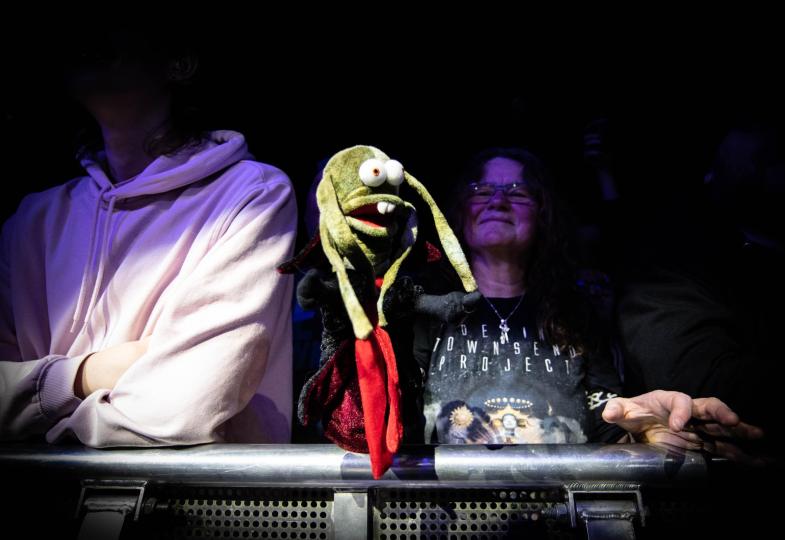
Thank you, my friend. I really appreciate it. Thank you for the interview and best shirt of the day, by the way!
(Proud moment)